
Why alpha particles matter
Alpha radiation is short-ranged, but it isn't harmless. An alpha particle is a helium nucleus (two protons and two neutrons) thrown out of a heavy, unstable nucleus such as uranium, thorium, radium or radon at several million electron-volts of energy. It's stopped by a sheet of paper, a few centimetres of air or the outer layer of dead skin. Once an alpha emitter is inhaled or ingested, though, it puts all of that energy into living tissue over a very short distance. That's why alpha contamination is taken seriously in:
- Nuclear decommissioning and waste handling, where surfaces, tools and people have to be checked for contamination.
- Radon monitoring in homes, mines and underground workplaces.
- Mineral processing of thorium- and uranium-bearing ores such as monazite.
- Security and emergency response, where radioactive material has to be located quickly.
The same property that makes alphas easy to shield also makes them hard to detect. A detector's entrance window has to be thin enough for the particle to get through, and the sensor has to be sensitive enough to register a very brief event. Our goal was to see how far we could get with a compact, low-voltage, solid-state detector, with no gas-filled tube or bulky photomultiplier tube.
How the detector works
Our detector turns each alpha particle into a flash of light, and then turns that flash into an electrical pulse.
Step 1: Alpha → light, using a ZnS(Ag) scintillator
Silver-activated zinc sulphide, ZnS(Ag), is one of the oldest and still one of the best scintillators for alpha particles. Ernest Rutherford's team counted alpha flashes on zinc sulphide screens by eye more than a century ago. When an alpha particle stops in the ZnS(Ag) layer, the material gives off a burst of blue light (peak ≈ 450 nm). Its light output is very high, and because the active layer is only a few tens of microns thick, it responds strongly to alphas while being largely blind to gamma rays.
Step 2: Light → electrical signal, using a silicon photomultiplier (SiPM)
A silicon photomultiplier is an array of thousands of microscopic avalanche photodiodes (SPADs) running in Geiger mode on a single chip. Each one can detect a single photon, and their outputs add up, so the size of the signal follows the size of the light flash. Compared with a traditional photomultiplier tube, a SiPM is:
- Small: millimetres rather than centimetres.
- Low-voltage: tens of volts instead of a kilovolt or more.
- Rugged: it isn't affected by magnetic fields and has no glass vacuum envelope.
- A good spectral match: typical SiPMs are most sensitive in the blue, close to where ZnS(Ag) emits.
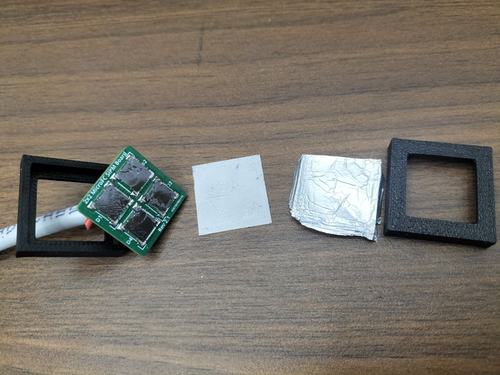
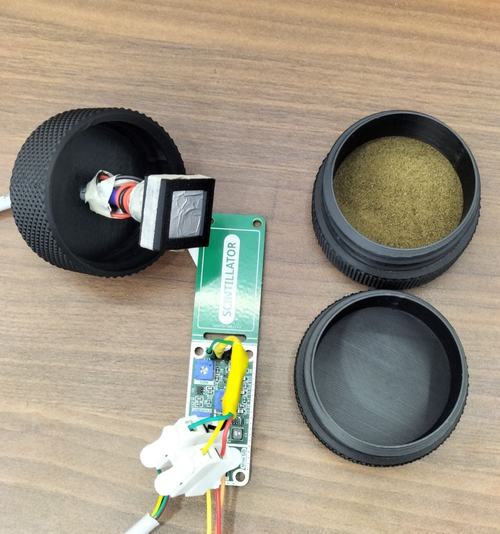
We used a 2×2 SiPM array so the active area would be large enough to cover a scintillator film about 2 cm × 2 cm.
Building the detector
The alpha source: natural monazite sand
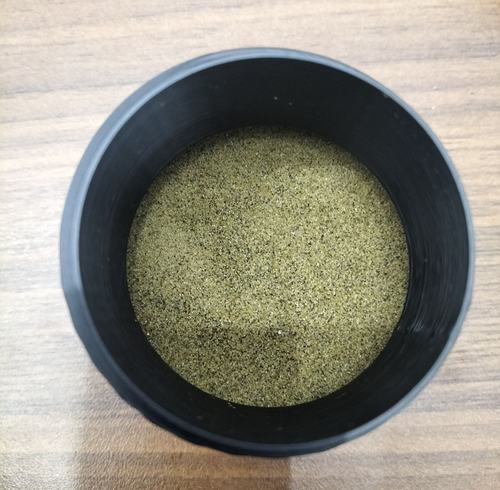
For a safe, easy-to-get test source, we used monazite, a naturally occurring phosphate mineral found in beach sands. It carries thorium, and in smaller amounts uranium. As thorium-232 decays through its decay chain, it gives off a series of alpha particles with energies of roughly 4–9 MeV, so monazite is a steady, low-level natural alpha source.
Assembly
- Cut the scintillator. We cut the ZnS(Ag)-coated plastic film to a 2 cm × 2 cm square (4 cm²) to match the SiPM array.
- Optically couple it. We spread a thin, even layer of silicone over the SiPM array and pressed the film onto it. The silicone does two jobs: it holds the film in place, and it fills the air gap between film and sensor so more of the scintillation light reaches the SiPMs.
- Align and secure it. We checked that the film fully covered all four SiPMs and couldn't shift, then fitted the assembly into a 3D-printed frame.
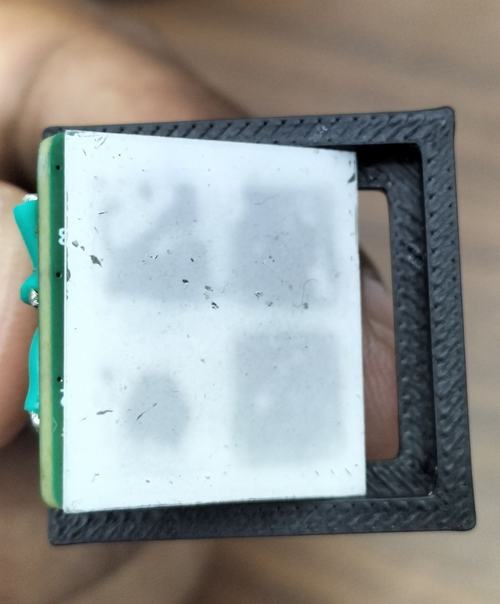
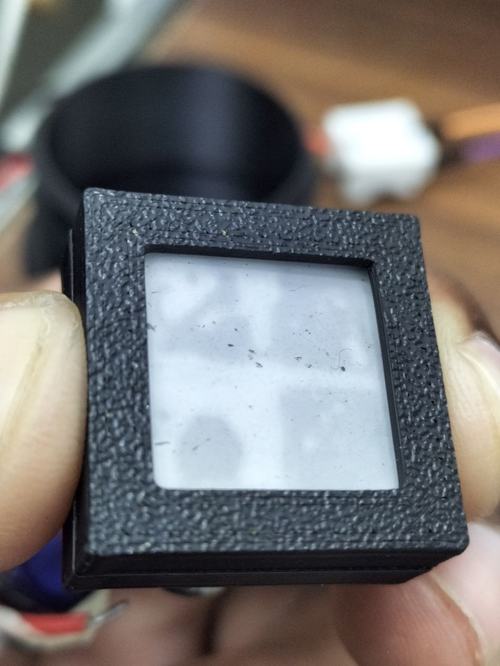
Design note: which way the film faces matters. Alpha particles can't get through even a thin plastic backing, so the ZnS(Ag) layer must face the source. The plastic backing sits against the sensor. Getting this detail wrong is one of the most common reasons a scintillation alpha detector shows nothing.
Keeping it dark
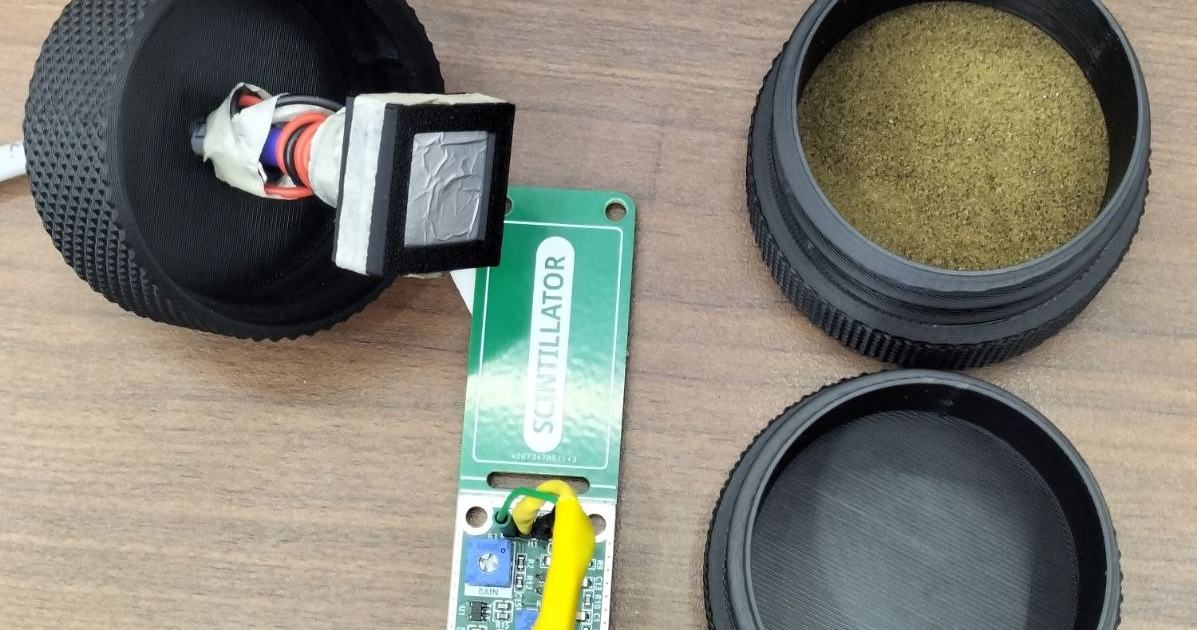
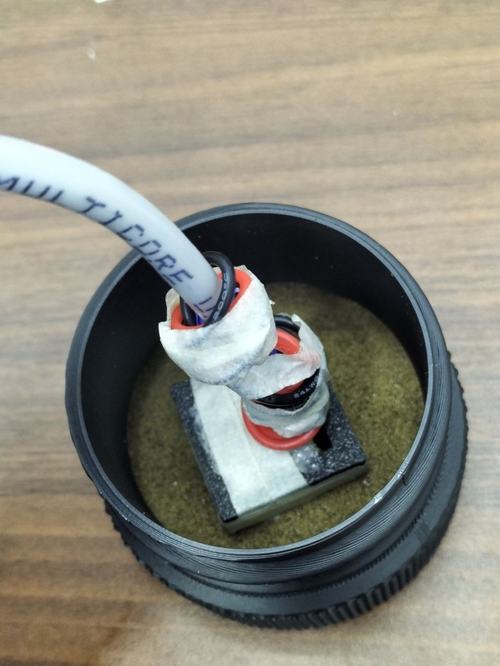
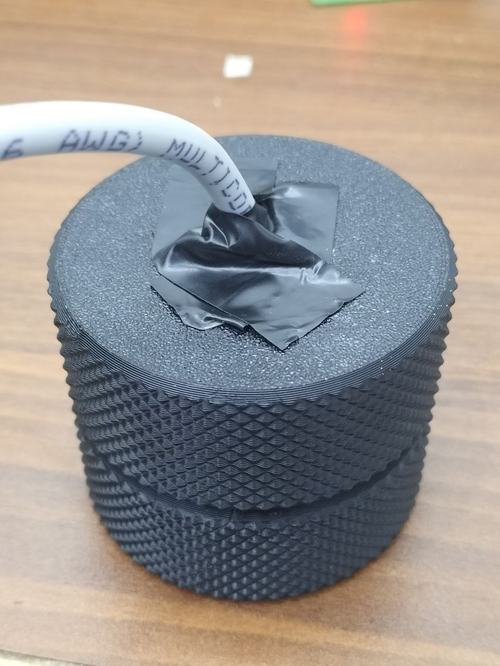
A SiPM can see single photons, so ordinary room light would swamp the scintillation signal completely. We placed the detector face-down in close contact with the monazite, inside a light-tight, 3D-printed black enclosure. The cable feedthrough was sealed against light leaks.
Taking the detector out of the dark: an aluminium-foil window
A fully sealed enclosure is fine on the lab bench, but a practical instrument has to work in normal room light. Commercial alpha probes solve this with a very thin aluminised entrance window. It is opaque to light but thin enough for alpha particles to pass through.
We tested the same idea by covering the ZnS(Ag) film with a thin layer of aluminium foil, clamped in place by the second half of the 3D-printed frame. The foil blocks room light, so the detector could be operated with the enclosure open.
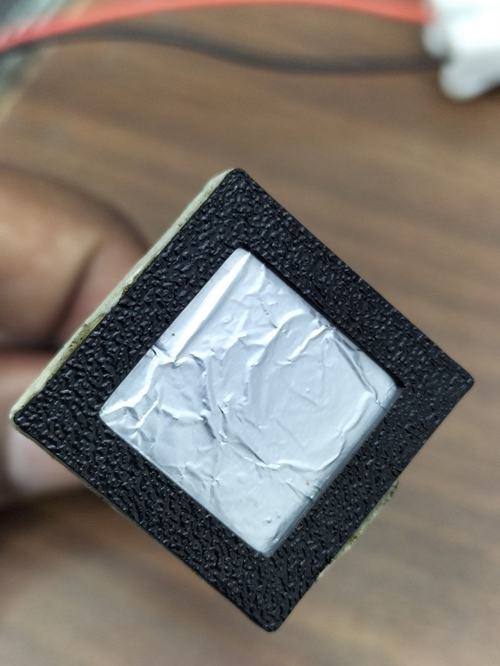
There is a trade-off. Every micron of window material takes energy from the incoming alpha particle. Household aluminium foil is roughly 10–20 µm thick, much thicker than purpose-made alpha windows. It stops the lower-energy alphas from the thorium decay chain. The highest-energy alphas, up to about 8.8 MeV, can still get through and reach the scintillator, with some energy lost on the way.
Results: seeing the pulses
We connected the SiPM anode directly to a digital storage oscilloscope, with no preamplifier or pulse shaping, and triggered on rising edges.
Test 1: bare scintillator, enclosure closed
With the monazite in place and the enclosure closed, the oscilloscope captured clear, well-defined pulses:
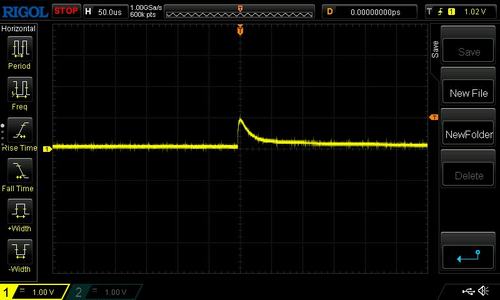
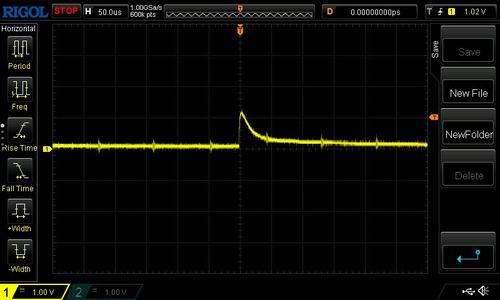
Some features of these signals are worth pointing out:
- Large amplitude with no amplification. The pulses reach about 1 V straight from the sensor. That reflects both the high light yield of ZnS(Ag) for alpha particles and the high gain of the SiPM. A signal this size can easily be counted with simple, low-cost electronics.
- Sharp rise, smooth decay. Each pulse rises almost instantly and then relaxes back to the baseline over tens of microseconds. The shape of the tail is set mostly by the readout circuit rather than the scintillator, so proper pulse shaping will make the pulses much narrower and allow higher count rates.
- Clean baseline. Between events the baseline stays quiet, leaving plenty of margin to set a discrimination threshold.
Test 2: aluminium-foil window, enclosure open
Next, we put the foil-covered detector in close contact with the monazite and left the enclosure open to room light. Discrete pulses were still captured, with the same fast-rise, slow-decay shape as in Test 1:
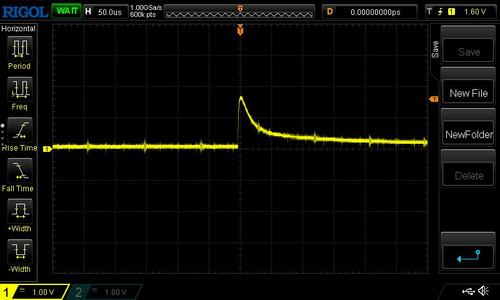
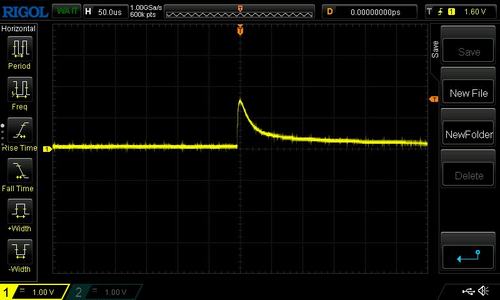
Two things stand out:
- The foil works as a light shield. Room light didn't overwhelm the SiPM, and the baseline stayed quiet between pulses. That's the key requirement for an instrument that works outside a dark box.
- Pulses still reach the scintillator through the foil. For this test we raised the trigger to 1.6 V, so every captured event was a large, clearly defined pulse. That fits the higher-energy alphas getting through the foil. Because the trigger levels were different, we don't compare pulse heights between the two tests. We'll measure the difference in count rate at a common threshold next.
Test 3: the paper test, proof that the pulses are alphas
Monazite doesn't only emit alpha particles. Its decay chain also produces beta particles and gamma rays, and electronic noise or stray light can create pulses too. So how do we know the pulses we saw were alphas?
We used the classic test, which goes back to Rutherford: a single sheet of paper. Paper stops alpha particles completely. Beta particles and gamma rays pass through it almost unaffected, and so would any electrical interference.
We folded a paper cap and fitted it over the foil-covered detector face, then placed the detector back on the monazite with the same oscilloscope settings.
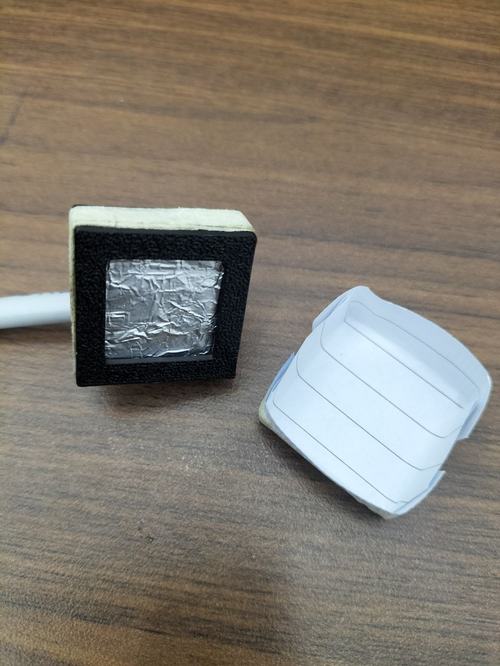
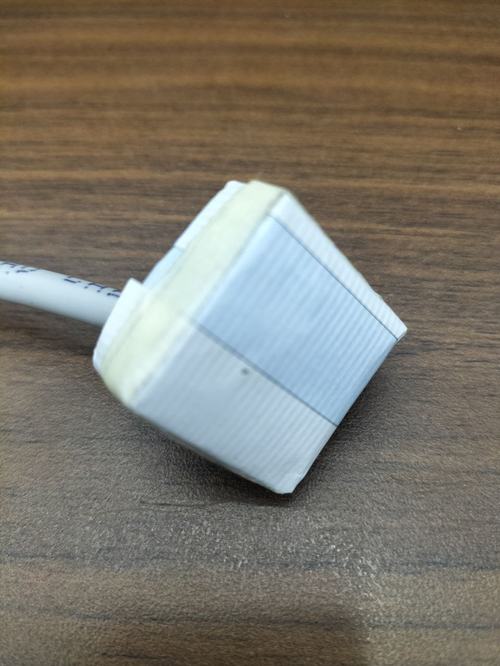
The result was clear-cut:
- Paper shield fitted: no pulses. The oscilloscope did not trigger.
- Paper shield removed: the pulses returned.
With the paper in place, the pulses disappeared. When we took the paper away, they came back. Beta and gamma radiation would have gone straight through the paper, and so would electronic noise. The only thing the paper removed was alpha particles, so the pulses our detector records are alpha particles. The foil was on the detector for both measurements, so light leaking in can't explain the difference either.
In short, a thin ZnS(Ag) film on a small SiPM array, read out with nothing more than an oscilloscope, detected alpha particles from a natural mineral source. With a simple aluminium-foil window, it kept working in room light, and a paper-shield test confirmed that the pulses are alphas.
What's next
This first bench test shows that the basic approach works. We're now turning it into a characterised, quantitative detector:
- Count-rate and efficiency measurements. We'll move from single oscilloscope captures to counting pulses over a set time. That lets us measure the source, no-source and paper-shielded conditions as numbers, measure the background rate, and work out detection efficiency.
- A better entrance window. We'll measure how much the foil window reduces the count rate compared with the bare scintillator, and evaluate thinner, purpose-made aluminised films that let more of the alpha spectrum through while still blocking light.
- Front-end electronics. We'll add dedicated pulse shaping and discrimination so the detector can run as a standalone alpha counter. The Mini SiD board, an open-source SiPM front-end from the OpenGamma project, is already part of our bench setup for this stage.
- Optimisation. We'll look at how film thickness, optical coupling, light-tightness and SiPM bias affect signal-to-noise.
A note on safety
Monazite is a naturally occurring radioactive material. Even low-activity sources should be handled responsibly. Use gloves, keep the sand contained to avoid inhaling dust, wash your hands after handling it, and follow your local regulations for storing and disposing of radioactive materials.
Conclusion
Alpha particles don't travel far, but detecting them reliably has real value for safety, industry and the environment. By combining a ZnS(Ag) scintillator, one of the classic alpha detectors, with modern silicon photomultiplier technology, we've shown a compact, low-voltage detector that produces strong alpha-particle pulses without any amplification. With a simple aluminium-foil window, it keeps working outside a dark enclosure. A sheet of paper, the oldest alpha test there is, confirms that what it sees really is alpha radiation. It's an early step, and it points toward portable, affordable alpha monitoring instruments.
Interested in radiation detection, SiPM-based instrumentation or custom sensor development? Talk to Elementz about your embedded systems R&D requirements.